
The basics
What is a microchip?
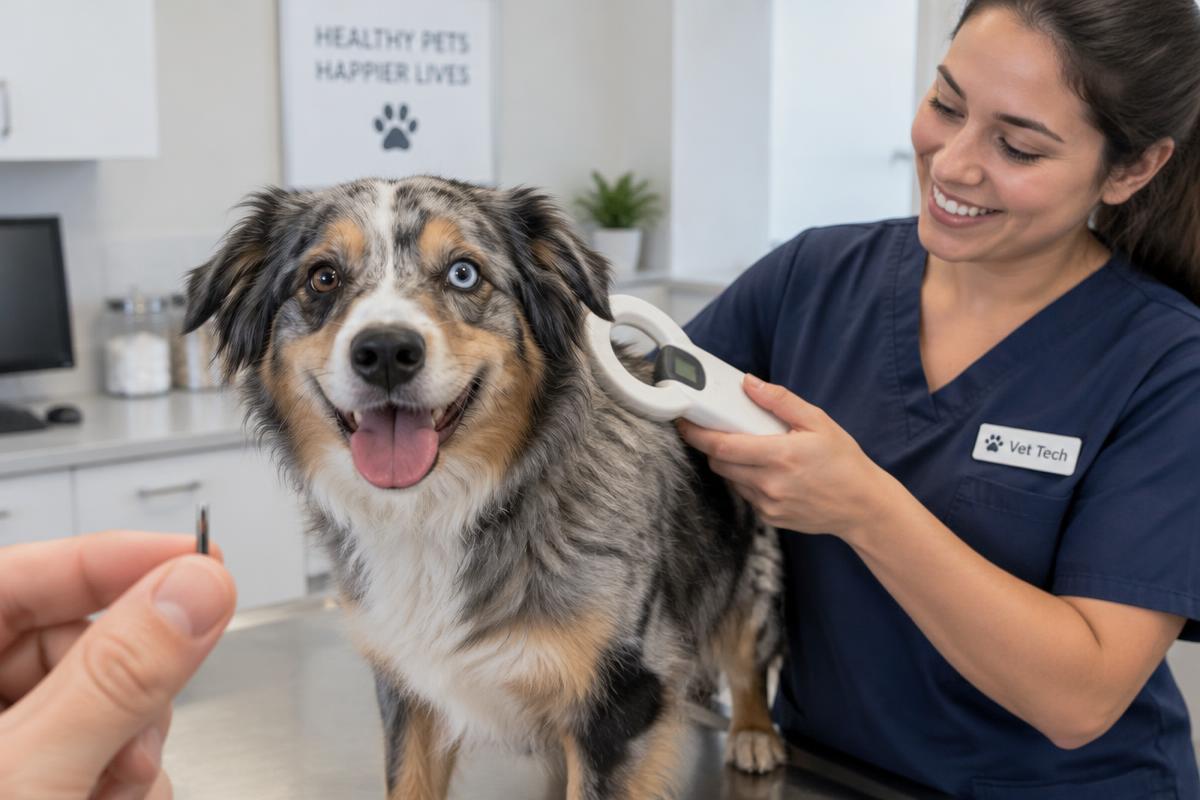
A microchip is about the size of a grain of rice. It's placed just under the skin between the shoulder blades with a quick needle, a lot like a vaccine. No surgery and no anesthesia needed. It has no battery and nothing to charge, and it lasts your pet's whole life.
Step by step
How it works
1. Chip
The chip holds one unique ID number. Nothing else.
2. Scan
A shelter or vet waves a scanner over your lost pet. The chip lights up the number.
3. Look up
The number is looked up in the registry, which shows your contact info.
4. Home!
They call you, and your pet comes home.
It's not a GPS tracker
A microchip can't show where your pet is on a map. It only works when someone finds your pet and scans it. Want live tracking? Add a GPS collar too.
Keep the tag too
A collar tag lets a neighbor call you right away. The chip is the backup that can't fall off. Together they're the best protection.
A chip only works if it's registered.
The chip is just a number. If it isn't registered, or your phone number is old, no one can reach you. Register right after the chip is placed and update it any time you move or change numbers. Not sure? Use the free AAHA Universal Pet Microchip Lookup to find which registry your chip is in.
Checklist
Make sure you're covered
- Register the chip with your name, phone and address.
- Update your info every time you move or get a new number.
- Ask your vet to scan the chip at checkups to make sure it still reads.
- Cats need chips too: indoor cats slip out more often than you'd think.